
Suggested Duration
2-3 hours
Timings
6:00 AM - 7:00 PM (closed Fridays)
Entry Fee
INR 250 Indians, INR 1300 foreigners
Location
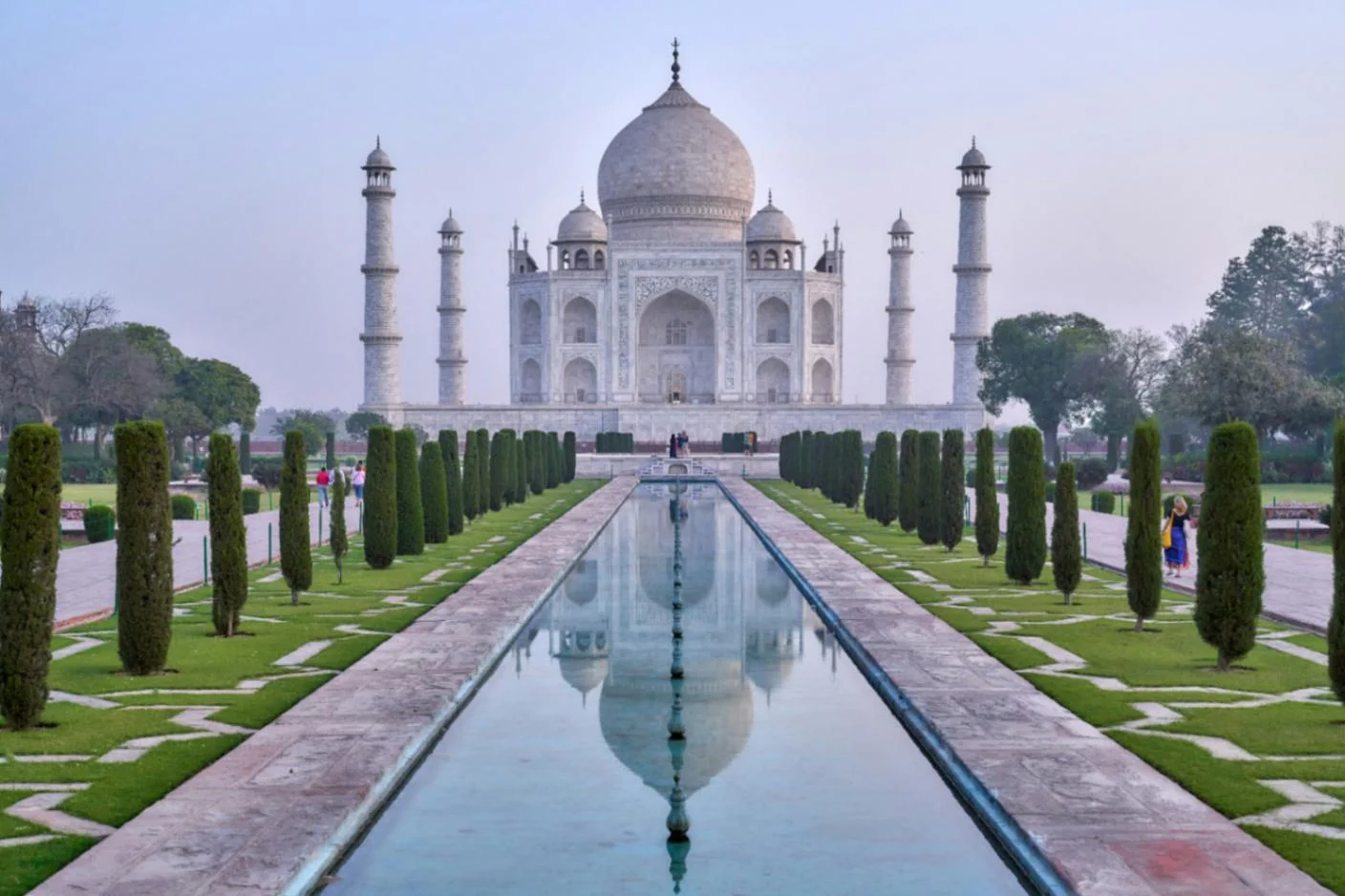
Get directionsStanding majestically on the banks of the Yamuna River, the Taj Mahal emerges like a jewel of white marble against the Agra skyline. This UNESCO World Heritage masterpiece, built by Emperor Shah Jahan as an eternal tribute to his beloved wife Mumtaz Mahal, captivates millions with its perfect symmetry and ethereal beauty. As dawn breaks, visitors witness the monument's marble façade transform from soft pink to golden amber, finally settling into pristine white—a magical display that changes throughout the day.
Walk through the grand red sandstone gateway and experience the breathtaking moment when the Taj Mahal reveals itself in full splendor. The intricate inlay work of precious stones, delicate calligraphy, and four graceful minarets create an architectural symphony that has remained unmatched for centuries. The central dome, flanked by smaller cupolas, seems to float weightlessly against the sky, while the surrounding gardens with their geometric patterns and reflecting pools enhance the monument's divine proportions.
Beyond its architectural magnificence, the Taj Mahal offers a profound emotional journey—a testament to eternal love that transcends time. Whether you're watching the sunset paint the marble in warm hues or experiencing the mystical beauty under a full moon, this Wonder of the World promises memories that will last a lifetime.
The Taj Mahal, India's crown jewel and UNESCO World Heritage Site, was commissioned in 1632 by Mughal Emperor Shah Jahan as an eternal symbol of love for his beloved wife, Mumtaz Mahal, who died during childbirth. Construction of this magnificent mausoleum began immediately after her death and took approximately 22 years to complete, finishing around 1654. Over 20,000 skilled artisans, architects, and craftsmen from across the empire and beyond contributed to its creation, with the main architect believed to be Ustad Ahmad Lahori.
The monument represents the pinnacle of Mughal architecture, seamlessly blending Persian, Islamic, and Indian architectural styles. Built entirely of white Makrana marble, the structure changes color throughout the day, appearing pink at dawn, white during the day, and golden under moonlight. The central dome rises 240 feet high, flanked by four identical minarets, while intricate inlay work featuring precious stones creates stunning geometric and floral patterns across its surfaces.
Beyond its architectural significance, the Taj Mahal holds immense cultural importance as a symbol of India's rich Mughal heritage and has become synonymous with eternal love worldwide. It has inspired countless poets, artists, and writers, earning recognition as one of the New Seven Wonders of the World in 2007. Today, this masterpiece attracts millions of visitors annually, serving as India's most iconic landmark and a testament to the country's artistic and cultural legacy.
Dharmapuri, Forest Colony, Tajganj, Agra, Uttar Pradesh