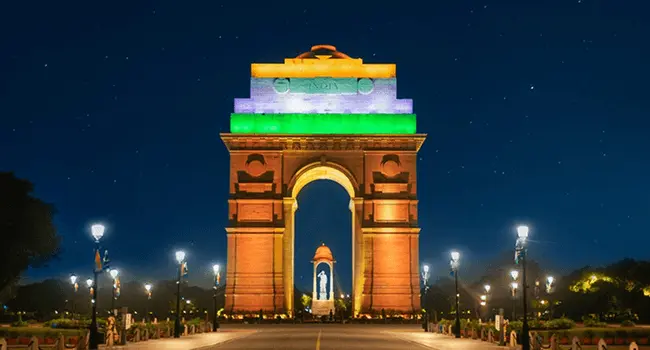

India Gate stands majestically as Delhi's most iconic war memorial, a towering testament to courage and sacrifice that draws millions of visitors each year. This 42-meter high sandstone arch, designed by Sir Edwin Lutyens, honors the 70,000 Indian soldiers who laid down their lives during World War I and the Third Afghan War. The monument's imposing structure and eternal flame create an atmosphere of reverence and national pride that resonates deeply with every visitor.
As you approach this architectural marvel, you'll be struck by the names of 13,300 servicemen etched into its walls, each telling a story of heroism. The surrounding manicured lawns and gardens provide the perfect setting for evening strolls, where families gather for picnics and children play as the monument is beautifully illuminated against the Delhi skyline. The nearby Amar Jawan Jyoti flame burns eternally, serving as a poignant reminder of the ultimate sacrifice made for the nation.
India Gate offers more than just historical significance—it's the heart of Delhi's social life. Street vendors line the area offering local delicacies and souvenirs, while boat rides on the nearby water bodies add a touch of recreation. The monument serves as the starting point for the grand Republic Day parade, making it a symbol of India's democratic spirit and cultural heritage that no visitor to Delhi should miss.
India Gate stands as one of New Delhi's most iconic monuments, built between 1921 and 1931 to honor the 82,000 Indian and British soldiers who sacrificed their lives during World War I and the Third Afghan War. Designed by renowned British architect Sir Edwin Lutyens, this magnificent 42-meter high sandstone arch was originally called the All India War Memorial and serves as the eastern terminus of the Rajpath, forming an integral part of Lutyens' Delhi urban planning vision.
The monument gained deeper historical significance following India's independence in 1947 and subsequent wars. After the Indo-Pakistani War of 1971, the Amar Jawan Jyoti (Flame of the Immortal Soldier) was established beneath the arch in 1972, featuring an eternal flame that burns day and night to commemorate unknown soldiers. The names of 13,300 servicemen, including some from the United Kingdom, are inscribed on the monument's walls, making it a solemn reminder of wartime sacrifices.
Today, India Gate transcends its role as a war memorial to become the cultural heart of New Delhi. The sprawling lawns surrounding the monument transform into vibrant gathering spaces where families picnic, children play, and vendors sell traditional snacks during evenings and weekends. Republic Day celebrations witness grand parades passing through the Rajpath, with India Gate serving as the magnificent backdrop for this national spectacle, reinforcing its status as a symbol of Indian pride and unity.
Delhi